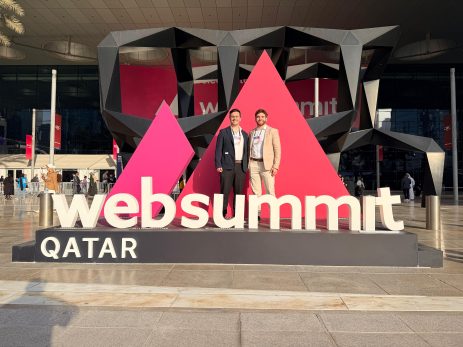
Web Summit has long served as a global meeting point for founders, investors, technologists, and regulators, shaping our digital future. In 2026, its return to Doha reflected more than continuity; it underscored the region’s evolving role in the digital economy.
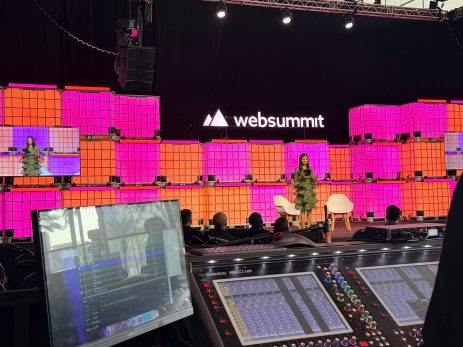
From February 1 to 4, 2026, Web Summit Qatar brought together tens of thousands of people from around the world. Attendees included early-stage startups, global companies, venture capitalists, and government leaders. Over four days and 14 content tracks, the event looked at the technology industry insights are changing economies, and societies.
The tracks covered topics like Agentic AI, fintech, deep tech, sports tech, digital health, sustainability, and the creator economy. All of them highlighted one central idea: technology is now the foundation of modern economies, not just a separate sector.
Why This Moment Matters for the MENA Region
Web Summit Qatar reflects a broader transformation underway across the Middle East.
Across the Gulf, governments and sovereign funds are moving beyond passive investment in global technology companies. Instead, they are building a digital ecosystem strategy that combines infrastructure, startup programs, regulatory frameworks, and talent development to accelerate long-term growth.
Qatar’s summit plays a crucial role in connecting these regional ambitions with global capital, talent, and partnerships. Cities like Doha are increasingly becoming hubs for ideas, investment, and collaboration, demonstrating the region’s commitment to long-term technological leadership.
Key Themes That Defined Web Summit Qatar 2026
1. AI is Moving from Experiments to Real-world Impact
AI was a central topic across the summit, but the tone of the conversations has clearly evolved.
In past years, discussions focused on pilots, proofs of concept, and AI’s future potential. In Doha, the emphasis shifted to production-ready systems already delivering measurable value.
Leaders spoke less about what AI might do and more about how to integrate it into core operations in enterprises, build strong engineering foundations, and scale intelligent systems across entire organizations.
AI is no longer a side initiative. It is becoming a core competitive advantage for companies and countries alike.
2. Digital Sovereignty is Reshaping National Strategies
Digital sovereignty emerged as one of the most compelling themes at Web Summit Qatar.
Governments in the Gulf are no longer content to be passive participants in the global tech economy. They are actively shaping their own digital futures by building ecosystems that combine infrastructure, capital, and talent.
This vision was reinforced in the keynote by Sheikh Mohammed bin Abdulrahman bin Jassim Al Thani, Prime Minister and Minister of Foreign Affairs, who described innovation as the world’s most valuable currency.
Qatar is putting that philosophy into action with a $2 billion expansion of the Qatar Investment Authority (QIA) venture capital program, bringing its total “Fund of Funds” to $3 billion. By reducing entry risk for top-tier international VCs, this fund embeds global expertise directly into the local ecosystem, creating opportunities for startups to thrive.
Web Summit Qatar illustrated how these initiatives are turning strategy into execution, attracting global talent and capital while positioning the region as a technology hub with tangible impact on the worldwide stage.
3. Infrastructure and Deep Tech are Back at the Center
Another clear shift at the summit was the renewed focus on foundational systems.
Rather than focusing solely on apps or digital interfaces, many sessions explored the physical and digital infrastructure needed to support next-generation economies. Mobility networks, energy systems, urban platforms, and connected experiences built on public services were framed as the prerequisites for innovation at scale.
Smart infrastructure was consistently described as the integration of AI, automation, and data into physical assets, optimizing buildings, electricity grids, transportation, and water systems to enable more efficient, sustainable, and comfortable living. The future of smart cities is being built in the MENA region, and we’re seeing giga-projects come to life.
This perspective reframes digital infrastructure not as a background utility, but as the platform on which we build economic growth, startup ecosystems, and digital services.
4. Fintech Continues to Fuel Digital Economies
Fintech remained one of the most active areas at Web Summit Qatar, drawing strong interest from startups, banks, and investors.
Discussions focused on digital payments, wallets, embedded finance, open banking, and financial inclusion. Fintech in MENA is increasingly seen as a key enabler of digital lifestyles, powering e-commerce, mobility platforms, public services, and smart cities.
As financial services become more embedded into everyday experiences, they are helping create seamless, connected ecosystems for citizens, residents, and businesses.
Engineering the Next Phase of Growth
AI adoption, digital sovereignty, deep-tech investment, and fintech expansion all point in the same direction: economies are being designed for intelligence, resilience, and scale.
At Globant, we see this shift accelerating across industries. Companies are moving towards AI-powered, engineering-led operations, building platforms that connect entire ecosystems, and creating seamless, end-to-end digital experiences that impact people’s lives and society as a whole.
Learn more about how Globant is empowering enterprises to harness technology for growth.